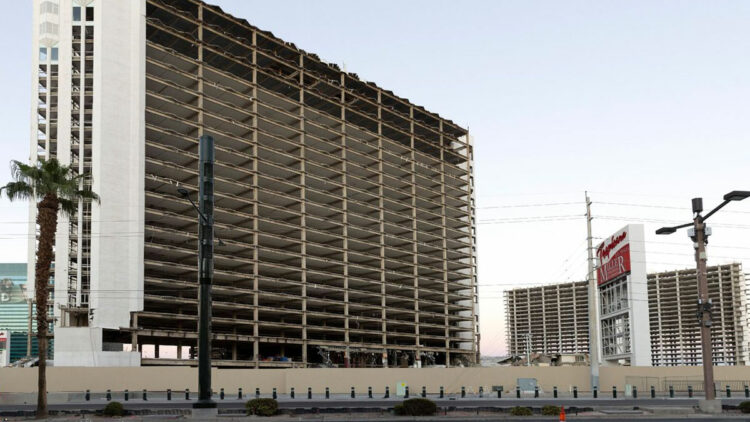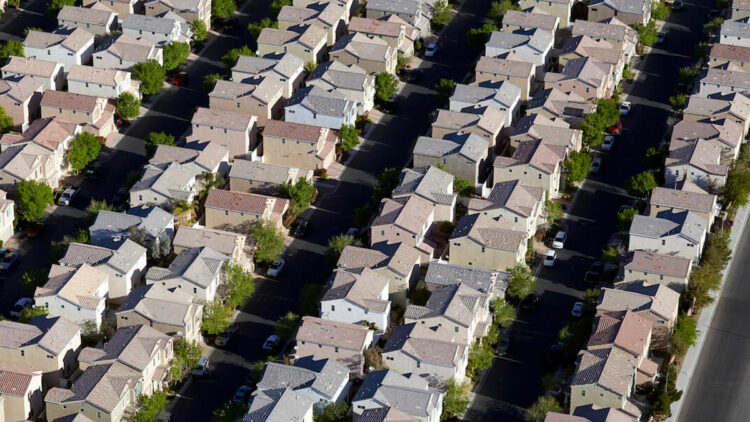
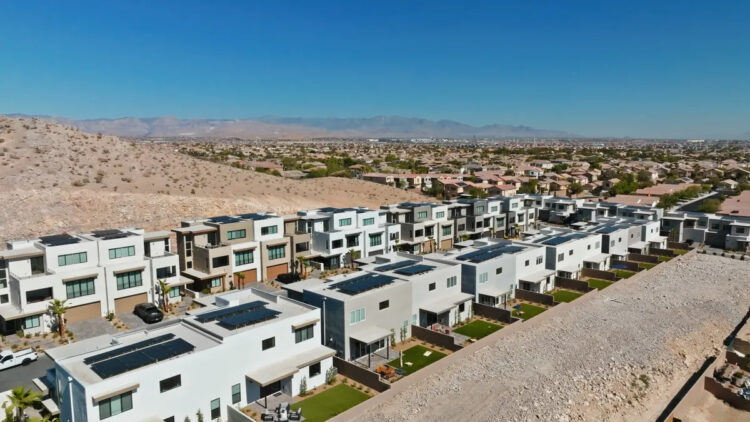
It’s no secret: Nevada has been booming. With building and development, and a growing population. Residential construction can’t keep up with population influx. Industrial real estate has gone through cycles of too much inventory to periods where development authorities are begging for spec buildings. Retail building is ramping up in the wake of COVID, shoppers returning to everything from grocery-anchored centers to experiential centers, where entertainment is half the fun of shopping.
When asked about the market for builders and developers in northern and southern Nevada, the answer is they’re doing well. There are projects coming online. But there are also projects (and their owners or builders) hesitating. Keeping their cash in their pockets and waiting for a little more stability in the economic climate.
While the answer to “How’s the climate for builder/developers in Nevada” is it’s going well, there’s also the added part of the answer: But it’s not quite where it was two years ago.
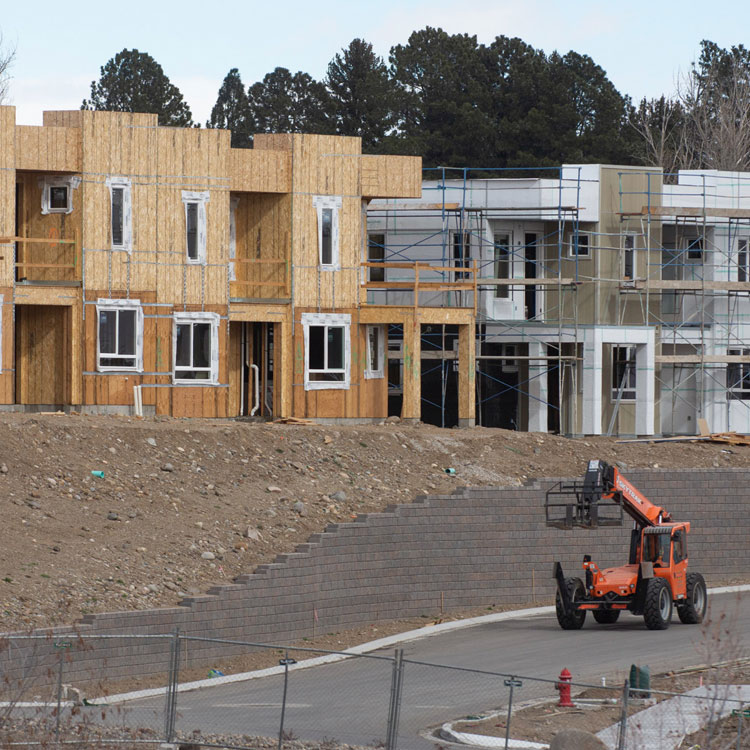
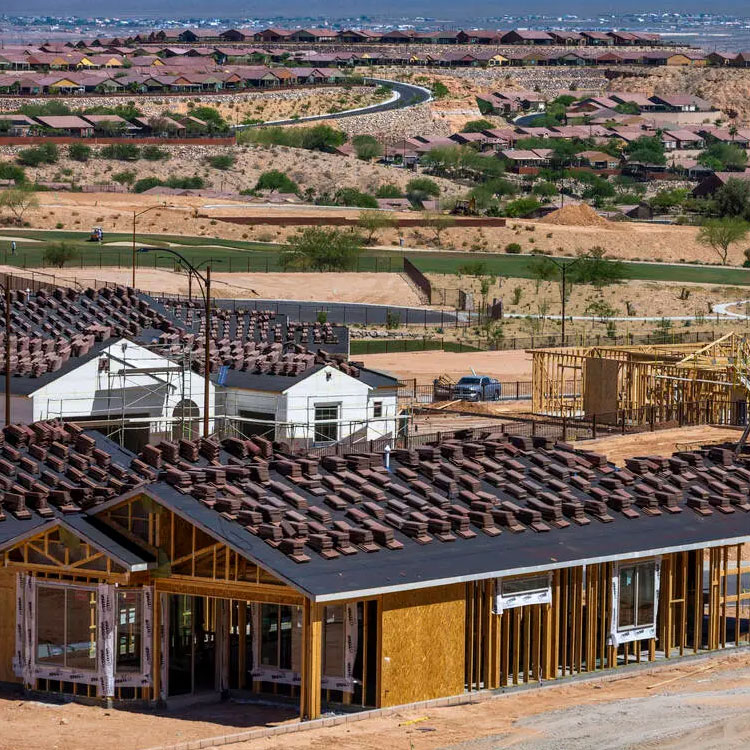
One market sector just blooming again after a 15 year hibernation is grocery-anchored retail centers.
“We’re seeing a lot right now. Those big retailers had kind of gone to sleep with very, very moderate expansions, probably clear back to the Great Recession,” said Chet Opheikens, president/CEO, R&O Construction. There’s a resurgence of grocery-anchored retail projects, probably because retail follows residential. “We’ve had such a big boom in residential growth throughout the country. Look at Utah’s growth, Nevada’s growth, and Reno and southern Nevada growth—we need to build homes for people that need homes. That’s part of the multifamily housing push that’s going on.”
Home builders and developers are doing quite well with Nevada’s growth, according to Bill Miles, past-president and board member, Nevada Builders Alliance. “They’re smaller builders, but they’re still doing very well. It’s just not like it was two years ago. They’re still selling their product, but instead of two weeks it might take two months.”
A curious change, given Nevada’s growing population—people have to live somewhere. Miles believes the slowdown indicates the region is getting back to normal. “We’ve been so over the top industry-wise for the last four or five years, I see us getting back to normal.” Not just with home building but with industrial buildings where currently there’s more balance in the market. Tenants and lessors are both making concessions to get businesses into industrial buildings today.
Retail plus entertainment is another change, this one radiating out of the COVID era. Restaurants, Opheikens said, are killing it in Nevada. People are considering going out to eat as the evening’s entertainment.
Shopping plus entertainment is another trend. “Grocery-anchored centers are still viable, especially growing with communities like Summerlin, Henderson, Inspirada,” said Art Zargaryan, CEO, Pegasus Development. Retail centers are being curated to attract locals and visitors. “It’s no longer about retail density, it’s about programming experience density.”
Experiential retail is a type of marketing where customers coming into a physical shopping space are offered experiences beyond simply shopping, like escape rooms, skateboard courses, shops that look like caverns. Gaming is still a large part of Nevada’s economy, but there’s capital investment in event entertainment even off the Strip and in locations like AREA15. There’s investment in sports teams and building stadiums to support them, all these areas are growing.
Not everyone is talking about new projects, though. Some are kept quiet in the planning stages, or even longer.
“A lot of the ownership is very tight lipped. It’s a very strange time right now a lot of us are seeing in the marketplace. A couple of my clients are like, ‘We don’t really want to go public until we actually break ground’,” said Larry Monkarsh, owner, LM Construction, a design-build contractor.
LM has broken ground on projects recently. Two buildings totaling approximately 360,000-square-feet in Henderson for Alton Industry, and a six-building project on Arville and Blue Diamond in southern Nevada. Both are industrial projects, both have grading completed and both are waiting for building permits.
Those projects show interest and investment in Nevada. Southern Nevada is holding its own, said Monkarsh, but there’s heightened awareness of the economic climate. “Everything across the board, the market, whether it’s Boise, Reno, Las Vegas, everybody is very cautious right now. Projects may pencil, but the uncertainty in our global and domestic climate has caused a little bit of a slowdown. People are taking a little extra time to make decisions, maybe not spending quite as much money as they thought they would on a building, or looking for value, looking for value add property where they feel like they’re getting a bargain. The momentum is starting to come back across all those different markets, Vegas included, and I think we’re starting to see our vacant product absorbed. It’s just taking a little longer than everybody thought,” said Monkarsh.
Cautiously or not, projects are moving forward. “Builders in the state are continuing to push forward with development be it north, south, east or west,” said Miles. For example, Apex Industrial Park in North Las Vegas is finally getting a water line out to it. The project spans 18,000 acres, roughly a third of which is developable. Development has been slow due to recurring problems getting infrastructure to the property. The water line is a major milestone.
“That’s the number one issue in Nevada, and Apex is a great example of infrastructure struggles,” said Miles. “No matter where you are in the state, it boils down to infrastructure—availability of water and power.”
Most builders in Nevada face issues getting infrastructure to projects. The problem encompasses more than those projects. Nevada is in competition with other states for every business it brings in. “The winning as far as attracting new industrial businesses and factories to their state used to be a different game 10 years ago,” said Miles. “Today it’s all about people wanting to move a business, start a business, build a building, and making certain the infrastructure is in place wherever they’re at.” They’re looking for shovel-ready sites, and getting infrastructure out to unoccupied sites is a challenge in Nevada.
Miles is developing a couple hundred acres of industrial sites in Mound House to meet a demand. “We’re almost built out with the Comstock Industrial Park, which is a great thing, but if we don’t have shovel-ready industrial sites and pads ready to go for people, they’re going to go elsewhere.” Building on a prepared site could take six months. Starting without a shovel-ready site could mean two years—businesses aren’t going to wait.
Almost all industries in today’s economy face headwinds. The uncertainty of geopolitical effects on construction and real estate combine with challenges that remain from COVID–-the limited availability of skilled labor, among others—and lingering aftershocks from the Great Recession.
“Headwinds in southern Nevada have local impacts and larger geopolitical impacts,” said Opheikens. R&O Construction builds some of the larger class A multifamily projects in southern Nevada. “Those are getting very hard to pencil,” said Opheikens, meaning creating new housing developments that can charge rents considered reasonable to the typical renter. Projects that don’t pencil are those where construction costs are higher than can be recouped in rent—and those often don’t get built.
Other challenges include costs of construction coming out of COVID, inflation, which hit the industry hard, logistics of getting materials to job sites, cost of materials which increased dramatically. Fuel, transportation, labor—the cost of everything has gone up substantially.
Land availability in both ends of the state is another challenge. “Infill parcels and underutilized corridors remain the name of the game, especially in southern Nevada,” said Zargaryan. “The days of greenfielding retail development are kind of behind us. Today the move is toward adapted reuse, redevelopment, and underperforming spaces and public/private land acquisitions.”
The Bureau of Land Management (BLM) controls significant portions of Nevada’s open land, releasing moderate amounts in periodic auctions. “Developers are having a hard time finding the right dirt suitable for development because all the sites that were available are taken,” said Opheikens. Those that remain are sites with significant challenges that cost more to improve. Scarcity is driving land costs through the roof.
“There are projects we’re working on currently so there are still opportunities, it just doesn’t seem like there’s as much opportunity as there was two years ago,” said Opheikens.
There’s not a lot of buildable land left in Reno, but there’s land in outlying areas, like Fernley and Silver Springs. Datacenters are flourishing there, attracted by available land and the fiberoptic superhighway running through the region. Because datacenters have to be cooled, the fact that even in the summer northern Nevada temperatures drop a good 30 degrees at night means datacenters save on power.
“With artificial intelligence driving it, the data industry is going at breakneck speed,” said Miles. “Could that end? Possibly. But right now they’re all still building and developing.”
Other projects developing in northern Nevada include an expansion of Tahoe-Reno Industrial Center in Storey County, and the Industrial Realty Group building Port of Nevada™ in Fernley.
Then there’s the fear of what’s going to happen next. Fear of sinking investment into a spec building that doesn’t lease. Fear of missing out and not starting to build when the market changes.
“Nobody knows,” said Opheikens. “So a lot of money these developers rely on by going through their money men to get investors, capital investment groups, those guys are sitting on the fence right now, or they’re saying, ‘Hey, I want 16 percent IRR and things are penciling in at less so I’ll keep my money in the bank and I’m not going to deploy it’.”
IRR—Internal Rate of Return—is the compounded annual rate of growth of an investment. It’s derived by assuming the time-discounted value of all future cash flows equals the cost of the initial investment. With tariffs, economic uncertainty, the changing place of the U.S. in the world market and world view, investors are maybe somewhat more hesitant than they were two years ago.
Opheikens believes investor uncertainty is a temporary issue. There’s money available and interest in Nevada. There’s cash waiting to be deployed in Nevada projects. It’s just that currently those people with the cash can’t make the pro forma work.
One area in commercial real estate seeing some very strong challenges is the industrial market. Along with the same challenges other development areas are facing, industrial saw strong growth spurts in northern and southern Nevada as a result of COVID when online shopping skyrocketed and warehousing was in demand. A lot of land was consumed and possibly more buildings than strictly necessary are now standing.
When southern Nevada put a moratorium on evaporative coolers, there was another rush to build industrial buildings utilizing those cooling systems and get grandfathered in.
“Because we didn’t want to spend the additional money it’s going to take us to improve these same projects without being able to utilize evaporative coolers,” said Opheikens. “So there’s this mad rush to get through entitlements and get through development and now here we are sitting in southern Nevada with millions of square feet of available space and yet our absorption rate of that space is one third of what’s available.” There’s a chance it could take three years before excess industrial inventory gets absorbed.
Which is also a temporary challenge. It’s not a market issue, it’s an inventory issue; time should correct it. It is, after all, more than shovel-ready for businesses wanting to locate here.
Workforce remains a problem for skilled trades. Construction lost skilled workers with each event that reverberated through the national economy and Nevada’s economy. The bursting of the housing bubble, the following recession, the COVID economic crisis, the tariffs and current uncertainty, they’ve all impacted the workforce.
The scarcity of skilled labor makes it difficult to build and develop specialty facilities like location-based entertainment (LBE) which involves interactive experiences that require participants to engage within a specific location. Pegasus Development builds everything except single family homes, and they focus a lot on location-based entertainment.
“Workforce is a problem,” said Zargaryan. “It’s a critical constraint, especially in the projects that we do and then specifically in location-based entertainment that requires specialty contractors, skilled labor. It’s been a problem since the post-pandemic era and busy as Las Vegas is or Nevada is, we can definitely do with more skilled labor.”
One way of finding the necessary workers is through the RFP process. Pegasus Development works to choose the right contractor and subcontractors that have a strong reputation and also a resource pool of skilled labor. Working with subs that have a good resource pool is important. While it’s possible to bring in labor from outside the market, LBE is very specialized. “We like to keep things as local as we can,” said Zargaryan. “And our trades are one of the best in the country.”
Toward finding that skilled labor, the Builders Alliance works with affiliated trades and has a referral system in place to help contractors and subs find the people they need.
“Nationwide there’s a labor shortage,” said Monkarsh. “The current climate with our domestic policies have put a crimp on not just our farm workers, but also on construction, and I think it’s only going to get more severe and tighter as time goes on and we lose skilled labor.”
It’s not just skilled labor in the field that’s hard to find. Builders and developers are having a hard time staffing their offices. Compounding the problem, large corporate employers are coming to Nevada and pulling employees from basically every industry sector. What was already difficult is getting harder. Major projects being built today are taking longer than they did a dozen years ago. Builders and developers are looking for solutions.
Because Nevada keeps building forward.
Writer:
Jennifer Rachel Baumer
Source:
https://nevadabusiness.com/