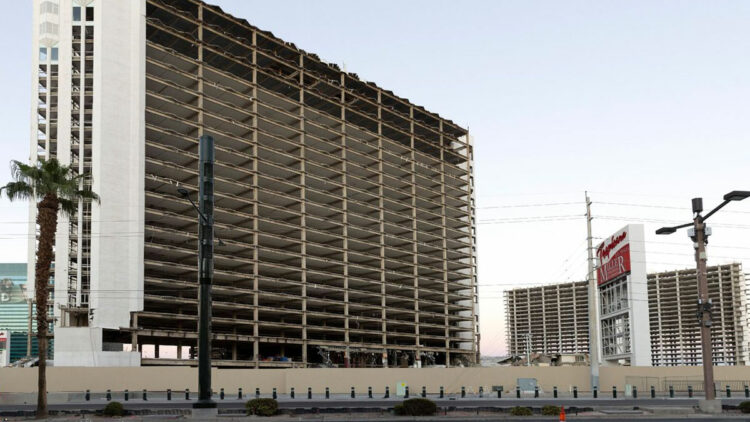
The Tropicana Las Vegas, one of the last surviving icons of the Strip’s mid-century glamour, officially closed its doors on April 2, 2024, after 67 years of operation. The resort’s demolition marked the end of a chapter in Las Vegas history — and the beginning of a massive redevelopment project that will soon bring a Major League Baseball stadium for the Oakland Athletics to the site.
Before the iconic implosion, months of preparation took place behind the scenes. Contractors carried out the removal of hazardous materials such as asbestos from the older sections of the property and dismantled auxiliary buildings to clear access for explosives. According to the National Demolition Association, the demolition team treated the process with surgical precision — each structure required specific explosive calculations, safety cordons, and environmental precautions to minimize dust and vibration.
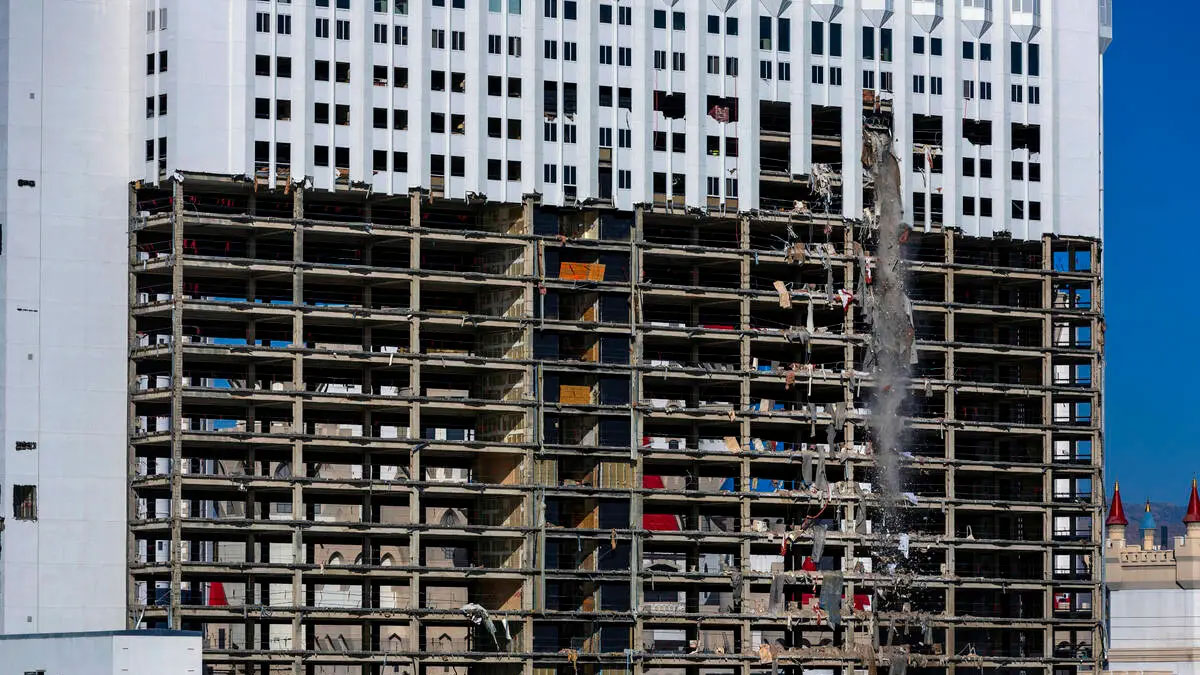
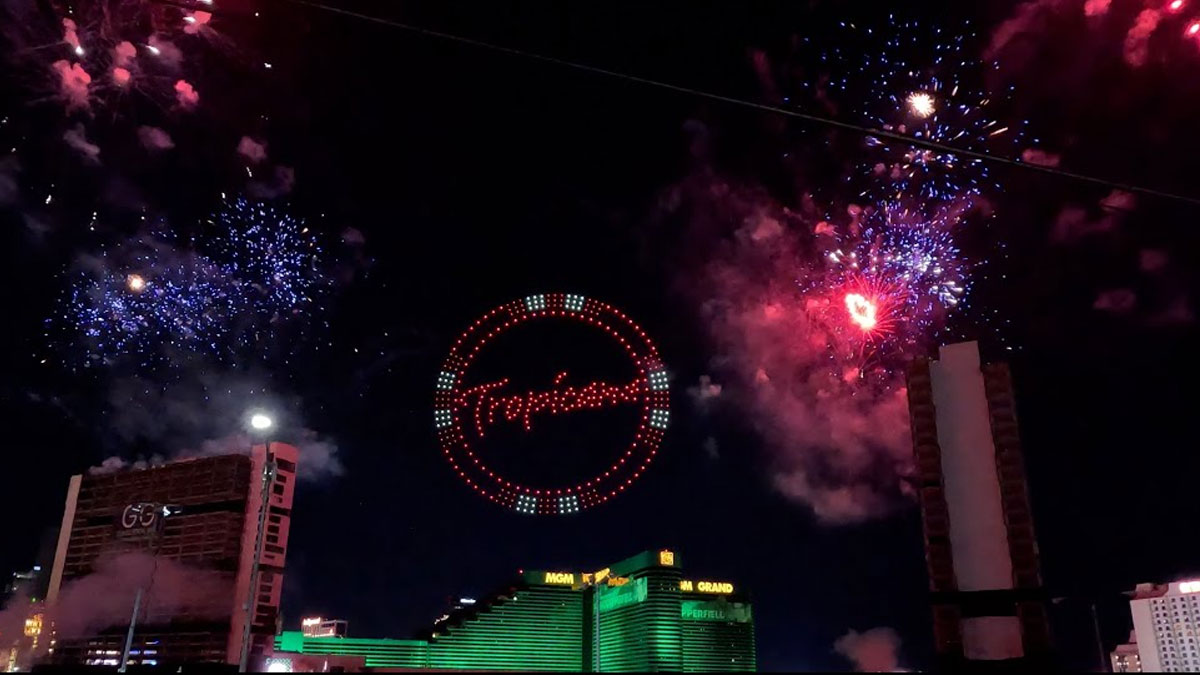
At 2:37 a.m. on October 9, 2024, Las Vegas witnessed another of its trademark spectacles: the implosion of the Tropicana’s twin towers. Thousands gathered nearby to watch as fireworks and a coordinated drone show lit up the night sky moments before the explosions. One tower, built in 1979 with a steel frame, required about 490 pounds of explosives; the second, a 1986 reinforced-concrete structure, needed about 1,700 pounds (National Demolition Association Hub).
Footage broadcast by CBS News and Global News showed the buildings collapsing in perfect symmetry, a “controlled chaos” that turned into dust clouds rolling over the southern Strip.
Immediately after the implosion, clean-up crews began clearing the massive debris field. Experts told KTNV Las Vegas that the first 12 hours were crucial for removing dust from nearby roads and preventing it from spreading into air systems. Nearly 98 percent of the material from the Tropicana was expected to be recycled — concrete crushed for fill, metals separated for reuse — continuing Las Vegas’s trend toward more sustainable demolition practices.
Beyond the engineering achievement, the implosion was rich in symbolism. The Tropicana opened in 1957 and quickly became known as the “Tiffany of the Strip,” hosting celebrities, showgirls, and Rat Pack legends. Its fall represents both nostalgia and renewal — the erasure of old Las Vegas glamour in favor of the city’s new identity as a sports-and-entertainment capital (The Guardian).
As CoStar News put it, the implosion “makes way for the next wave of Las Vegas development,” where casinos are no longer the sole anchors of the Strip but coexist with stadiums, concert arenas, and large-scale mixed-use destinations (costar.com).
Beyond the engineering achievement, the implosion was rich in symbolism. The Tropicana opened in 1957 and quickly became known as the “Tiffany of the Strip,” hosting celebrities, showgirls, and Rat Pack legends. Its fall represents both nostalgia and renewal — the erasure of old Las Vegas glamour in favor of the city’s new identity as a sports-and-entertainment capital.
As CoStar News put it, the implosion “makes way for the next wave of Las Vegas development,” where casinos are no longer the sole anchors of the Strip but coexist with stadiums, concert arenas, and large-scale mixed-use destinations.
Sources: AP News, The Guardian, CBS News, Global News, CoStar, Wikipedia, National Demolition Association Hub, KTNV Las Vegas.